

 Image 1 of 1
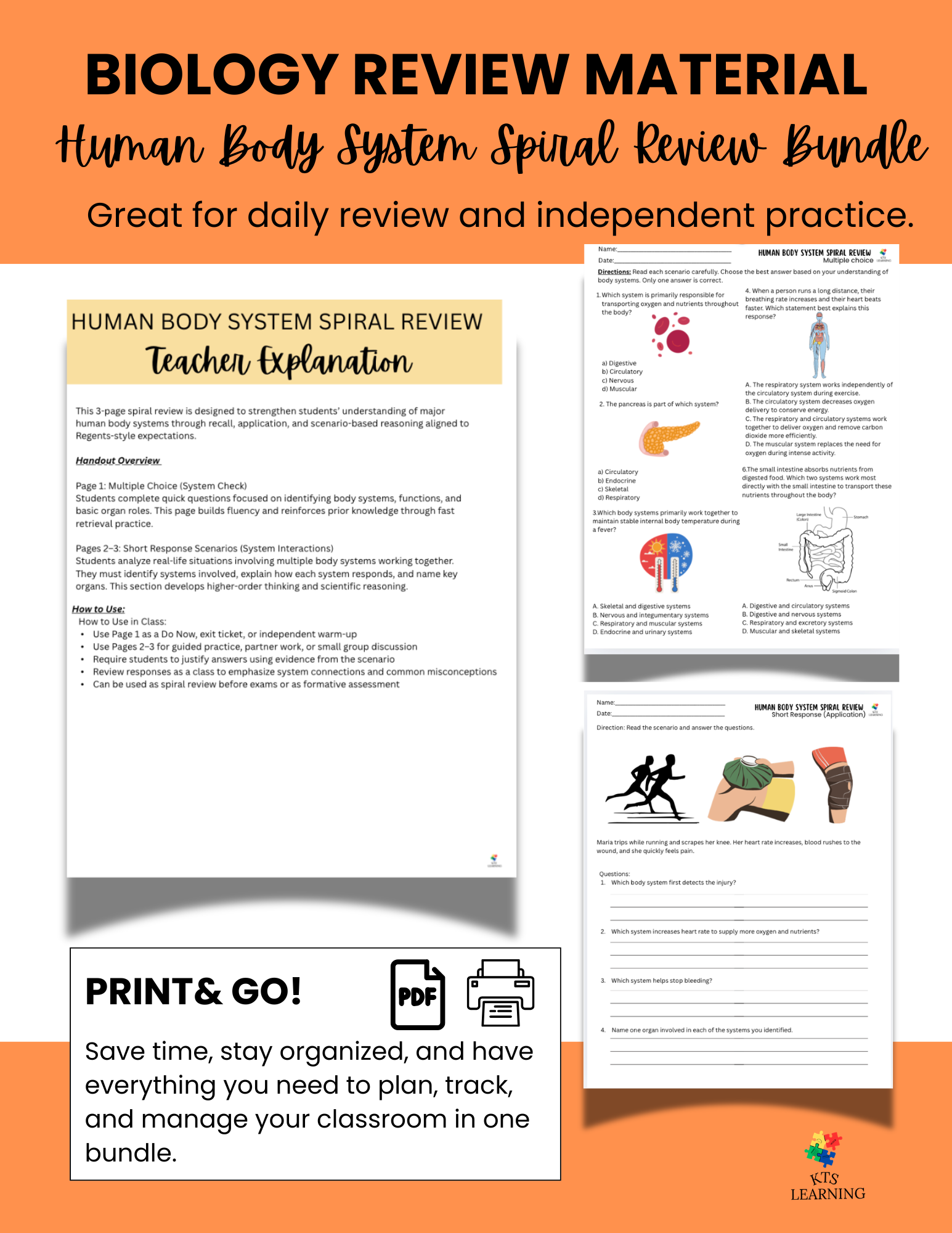
Strengthen student understanding of human body systems with this ready-to-use spiral review designed for Grades 8–10 science classrooms.
This resource includes:
• Page 1: Multiple choice questions for quick system identification and vocabulary review
• Pages 2–3: Higher-level short response scenarios where students analyze real-world situations, identify interacting body systems, and explain organ function and cause-and-effect relationships
Perfect for building both foundational knowledge and scientific reasoning skills, this activity helps students move beyond memorization and into true application of concepts.
Great for:
• Regents exam preparation
• Spiraled review throughout the unit
• Do Now, classwork, or homework
• Small group or partner discussion
• Formative assessment data collection
Students will practice identifying systems such as the nervous, circulatory, respiratory, digestive, and immune systems while explaining how they work together in real-life scenarios.
Skills Covered:
• System identification
• Organ-function relationships
• Cause and effect reasoning
• Scientific explanation writing
• Interactions between body systems
Simple to print, easy to implement, and designed to save teachers planning time while increasing student engagement and rigor.
Strengthen student understanding of human body systems with this ready-to-use spiral review designed for Grades 8–10 science classrooms.
This resource includes:
• Page 1: Multiple choice questions for quick system identification and vocabulary review
• Pages 2–3: Higher-level short response scenarios where students analyze real-world situations, identify interacting body systems, and explain organ function and cause-and-effect relationships
Perfect for building both foundational knowledge and scientific reasoning skills, this activity helps students move beyond memorization and into true application of concepts.
Great for:
• Regents exam preparation
• Spiraled review throughout the unit
• Do Now, classwork, or homework
• Small group or partner discussion
• Formative assessment data collection
Students will practice identifying systems such as the nervous, circulatory, respiratory, digestive, and immune systems while explaining how they work together in real-life scenarios.
Skills Covered:
• System identification
• Organ-function relationships
• Cause and effect reasoning
• Scientific explanation writing
• Interactions between body systems
Simple to print, easy to implement, and designed to save teachers planning time while increasing student engagement and rigor.